The physical toll of modern work is significant, even when the job itself isn’t physically demanding. Neck tension, tight shoulders, lower back …


Work shouldn’t hurt. But for many people, it does.
Long hours at a desk. Repetitive tasks. High-pressure environments. Constant demands. The physical toll of modern work is significant, even when the job itself isn’t physically demanding. Neck tension, tight shoulders, lower back discomfort, headaches and general fatigue have become so common that many people assume they’re just part of the job.
But, they’re not. And they’re not things you have to simply put up with.
The Health and Safety Executive’s latest figures show that in 2024/25, an estimated 511,000 workers in Great Britain suffered from a work-related strain or musculoskeletal disorders. That’s over half a million people dealing with pain, stiffness, and discomfort caused or worsened by their work. These conditions led to 7.1 million working days lost in a single year.
Behind those statistics are real people: office workers with chronic neck pain, warehouse staff with aching backs, healthcare professionals carrying tension from long shifts, and professionals in every sector feeling the cumulative weight of how they work.
At Centred, our massage and bodywork are designed to support the realities of modern working life, and we specialise in massage for work-related strain. Whether you’re desk-based, physically active, or juggling a mix of responsibilities, targeted treatment can help reduce strain, restore ease, and improve how your body feels day to day.
Why does modern work create so much physical tension?
Even when a job isn’t physically demanding in the traditional sense, the body is constantly adapting to stress, posture and repetitive patterns. The way you sit, stand, move and hold yourself during working hours shapes your muscular system over time.
The desk-based body
If you work at a computer, your body is likely adapting to conditions it wasn’t designed for. Prolonged sitting is one of the leading contributors to musculoskeletal pain in working-age adults. Hours spent in a static position create sustained load on muscles and joints, even when you feel like you’re doing nothing physical at all.
Common patterns include forward head posture, where the head drifts ahead of the shoulders to get closer to the screen. This overworks the neck muscles, particularly the suboccipital muscles, and can cause tension headaches. Rounded shoulders from reaching toward a keyboard. A compressed lower back from sitting without adequate support. Tight hip flexors from hours of hip flexion with no counterbalancing movement.
Research shows that prolonged sitting leads to increased discomfort over time among healthy workers, with measurable changes in pressure distribution and muscle tension within the first two hours of seated work.
Common contributors to occupational strain
The causes of work-related physical tension extend beyond sitting. They include:
Prolonged static postures. Whether sitting or standing, staying in one position for extended periods creates sustained muscle contraction without adequate recovery. Static postures, whether sitting or standing, are less advantageous than dynamic, varied positions.
Laptop and device use. Working on laptops, tablets and phones often forces awkward positioning. Screens positioned too low encourage forward head posture. Small keyboards and trackpads create repetitive strain on hands and wrists.
Repetitive movements. The same motion performed hundreds of times a day, whether typing, clicking, lifting or reaching, creates cumulative strain on specific muscle groups and soft tissues.
High cognitive load and stress. Mental pressure doesn’t stay in the mind. When you’re under stress, the body responds: shoulders rise, jaw clenches, breathing becomes shallow. Over time, this chronic low-level tension becomes the body’s default state.
Poor workstation ergonomics. Chair height, equipment spacing and desk posture all make a difference. But even with perfect ergonomics, sitting in the same position for hours isn’t good for the body.
Driving and commuting. Time spent in a car, on public transport, or cycling creates its own postural patterns and adds to the total load on the body before and after work.
Over time, these patterns create muscular tightness, reduced mobility, and a sense of being wound up or stuck in the body. Many people stop noticing the tension because it becomes normal. It’s only when pain becomes severe or movement becomes restricted that they realise how much strain has accumulated.
Understanding what’s actually happening physiologically can help explain why massage works, and why ignoring occupational strain often makes things worse.
Muscle tension and trigger points
When muscles are held in contracted positions for extended periods or repeatedly activated without adequate rest, they can develop areas of persistent tightness known as trigger points. These hyperirritable spots within taut muscle bands can cause local pain, referred pain in other areas, and restricted range of motion.
Trigger points are common in the upper trapezius (the muscle running from the neck to the shoulder), the levator scapulae (which connects the neck to the shoulder blade), the suboccipital muscles at the base of the skull, and the muscles of the forearm in people who type extensively.
Fascial restriction
Fascia, the connective tissue that surrounds and connects muscles throughout the body, can become restricted and less pliable when movement is limited. This contributes to the stiffness and reduced mobility many desk workers experience, particularly first thing in the morning or after long periods of sitting.
Postural adaptation
The body is remarkably adaptive. If you spend eight hours a day with your head forward and shoulders rounded, your muscles and connective tissues gradually adapt to that position. Muscles that should be long become short. Muscles that should be strong become weak. What starts as a temporary position becomes a structural pattern.
Stress response and muscle tension
When you’re under psychological stress, your body activates the same physiological systems that evolved to help you respond to physical threats. Cortisol and adrenaline increase. Heart rate and blood pressure rise. Muscles tense in preparation for action that never comes.
Research shows that touch in massage causes biochemical changes by reducing cortisol, reducing stress and improving mood by increasing serotonin and dopamine. This is why massage often helps people feel calmer and more grounded, not just physically looser and more comfortable.
How massage helps with occupational and work-related strain
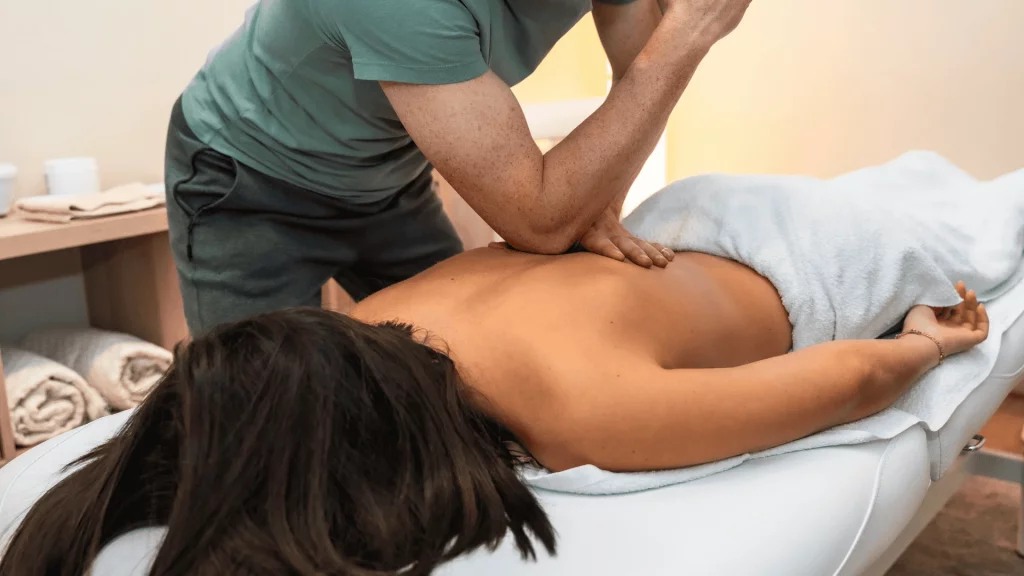
Massage therapy offers a direct, hands-on intervention for the physical patterns created by work. Unlike stretching or exercise alone, skilled massage can access and release tension that has become deeply embedded in muscle tissue.
What the evidence shows
Research consistently supports massage therapy as an effective treatment for musculoskeletal pain. A major systematic review and meta-analysis found that massage therapy effectively treats pain compared to no treatment, with a strong recommendation in favour of massage therapy for reducing pain intensity in people with musculoskeletal conditions.
For neck pain specifically, a randomised controlled trial found that deep tissue massage was more effective than advice alone for improving pain intensity in the short term.
Low-to-moderate-level evidence indicates that massage reduces short-term pain compared with no treatment in people with shoulder pain. It also improves function in the short term compared to no treatment in people with low back pain.
How massage addresses work-related strain
Effective clinical massage therapy and bodywork can:
Reduce muscle tension and stiffness. Direct pressure and soft-tissue manipulation help release contracted muscles, reduce trigger-point activity, and restore normal muscle tone.
Improve circulation and mobility. Massage increases blood flow to treated areas, supporting tissue health and recovery. It also helps restore the range of motion that may have become restricted through disuse or postural adaptation.
Ease headaches and neck/shoulder tightness. Many tension headaches originate from tight muscles in the neck, shoulders and base of the skull. Releasing these areas often provides significant relief.
Support recovery from repetitive strain discomfort. For people experiencing early signs of repetitive strain, massage can help address the muscular component before more serious problems develop.
Help regulate stress and promote relaxation. Measures of oxygen consumption, blood pressure, and salivary cortisol levels were all lower after a 10- to 15-minute chair massage in controlled studies. This physiological shift from stress response to relaxation supports both mental well-being and physical recovery.
Improve posture awareness and movement patterns. A skilled therapist can help you understand where you hold tension and how your work habits may be contributing to it. This awareness, combined with practical guidance, supports better patterns between sessions.
How different types of massage can help with different needs
Not all work-related strain is the same, and not all massage approaches are identical. At Centred, treatments are tailored to your specific situation.
Swedish massage
Swedish massage uses flowing strokes, kneading and gentle pressure to promote relaxation and improve circulation. It’s well suited for general stress relief, overall tension reduction, and people who prefer a gentler approach. If you’re feeling wound up, struggling to switch off, or simply need time to decompress, Swedish massage provides a restorative experience.
Deep tissue massage
Deep tissue massage uses slower strokes and more sustained pressure to reach deeper layers of muscle and fascia. It’s particularly effective for chronic tension, areas of restricted movement, and specific problem areas that don’t respond to lighter work. This approach is often appropriate for people with established patterns of work-related strain, particularly in the neck, shoulders, upper back and lower back.
Sports massage
Despite the name, sports massage isn’t only for athletes. It’s a results-focused approach that uses techniques such as deep tissue work, trigger point therapy, stretching, and soft tissue release to address specific problems and improve function. Sports massage is well-suited for people with physically demanding jobs, those dealing with specific areas of pain or restriction, and anyone who wants targeted work rather than general relaxation.
Combined, clinical massage therapy approaches
Many people benefit from a combination of approaches within a single session. Your treatment might begin with broader Swedish techniques to warm the tissues and promote relaxation, then move into deeper, more focused work on specific problem areas.
What to expect from massage for work-related strain
Your initial consultation
Every session begins with a short consultation to understand your situation. This covers your job and working patterns, posture habits and workstation setup, areas of discomfort or restriction, relevant medical history, and what you’re hoping to achieve from treatment.
The treatment itself
Based on your consultation, the session is tailored to address your specific concerns. This might mean focusing on the neck and shoulders for someone with desk-related upper-body tension. Or attention to the lower back and hips for someone who sits or drives for long periods. Or broader full-body work for someone carrying general stress and fatigue from a physically demanding job.
Throughout the session, communication is encouraged. Pressure can be adjusted, areas of focus can shift, and your feedback helps ensure the treatment is as effective as possible.
Aftercare and self-help
You’ll receive personalised aftercare guidance based on your specific situation. This might include simple stretches to maintain the benefits of treatment, awareness points about your posture or movement habits, suggestions for your workstation setup, and recommendations for how often to schedule follow-up sessions.
The goal is to help your body cope better in your actual working life, with massage as one component of a sustainable approach.
Making massage work for a busy schedule
One of the realities of work-related strain is that the people who need treatment most often feel they have the least time for it. Long hours, demanding schedules, and competing priorities can make self-care feel like a luxury.
Centred is set up to make treatment accessible:
Evening and weekend appointments. Sessions are available outside standard working hours, so you don’t have to take time away from work for treatment.
Flexible session lengths. From 60-minute targeted sessions focusing on specific areas to 90-minute comprehensive treatments, you can choose an option that fits your schedule and needs.
Location. We’re based in Hessle, just outside Hull. Easily accessible from Hull, Beverley, Cottingham, Anlaby, Willerby and the wider East Yorkshire area.
When to consider massage for work-related strain
You don’t need to wait until you’re in significant pain to benefit from massage. In fact, earlier intervention often produces better results.
Consider booking a session if you:
- Notice increasing tension in your neck, shoulders or back.
- Experience regular headaches, particularly at the end of the working day.
- Feel stiff or restricted in your movement.
- Struggle to relax or switch off from work.
- Find yourself constantly adjusting your position to get comfortable.
- Have started taking painkillers regularly for work-related discomfort.
- Feel generally wound up, tired, or run-down.
Massage works well as both a reactive treatment for existing problems and a proactive approach to prevent strain from accumulating.
Your body is part of your working life
Work is a significant part of life for most people. The way you work, the hours you keep, and the physical and mental demands you face all shape your body over time.
Ignoring the physical toll of work doesn’t make it go away. It just allows small tensions to become chronic patterns, minor discomfort to become significant pain, and temporary stress to become a permanent state of tension.
Massage therapy offers a way to actively support your body through the demands of working life. It’s not a luxury or an indulgence. For many people dealing with occupational strain, it’s a practical, evidence-supported intervention that makes a meaningful difference to how they feel and function.
Your body is doing a lot for you. Looking after it is part of doing your job well.
Ready to address your work-related strain?
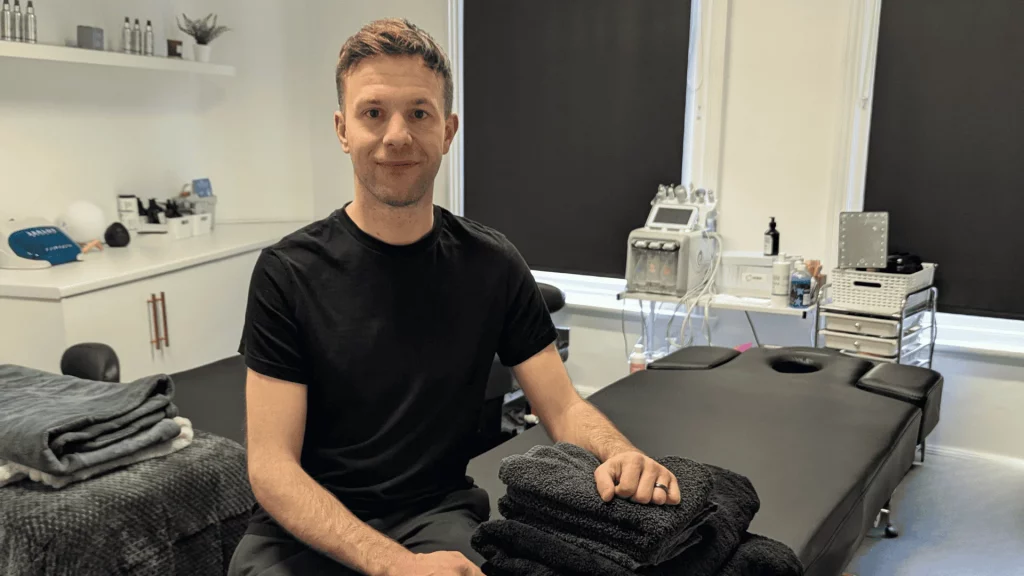
I’m Zac, Co-founder & Massage Therapist here at Centred. I work with clients on a range of work-related issues and offer evening and weekend appointments to suit you!